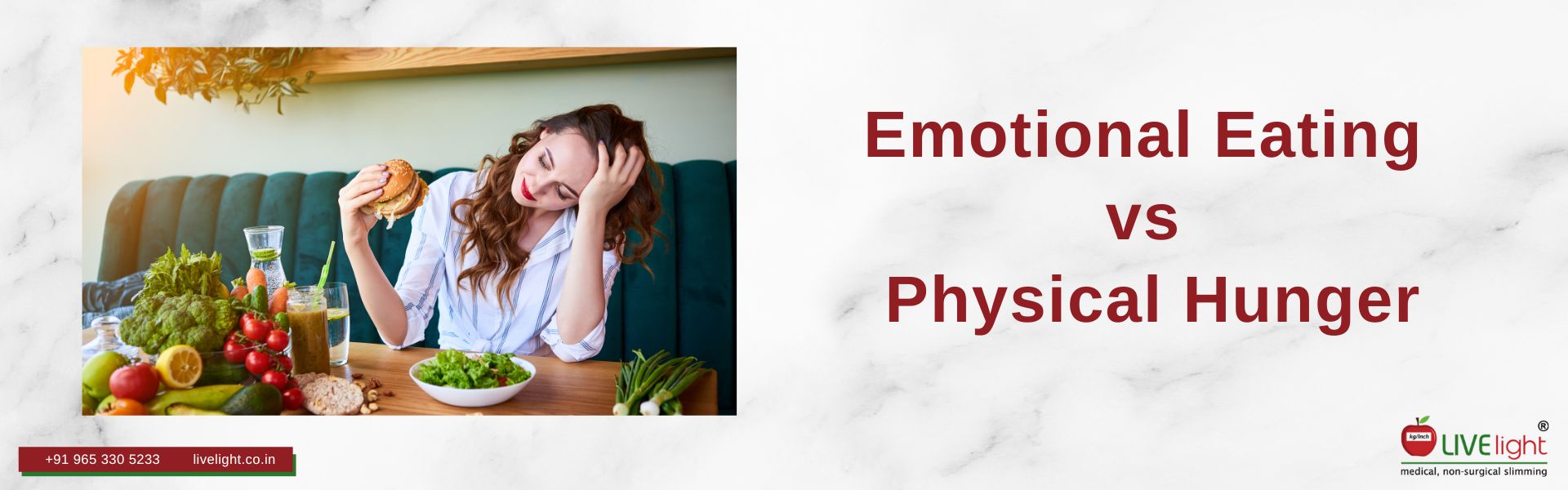
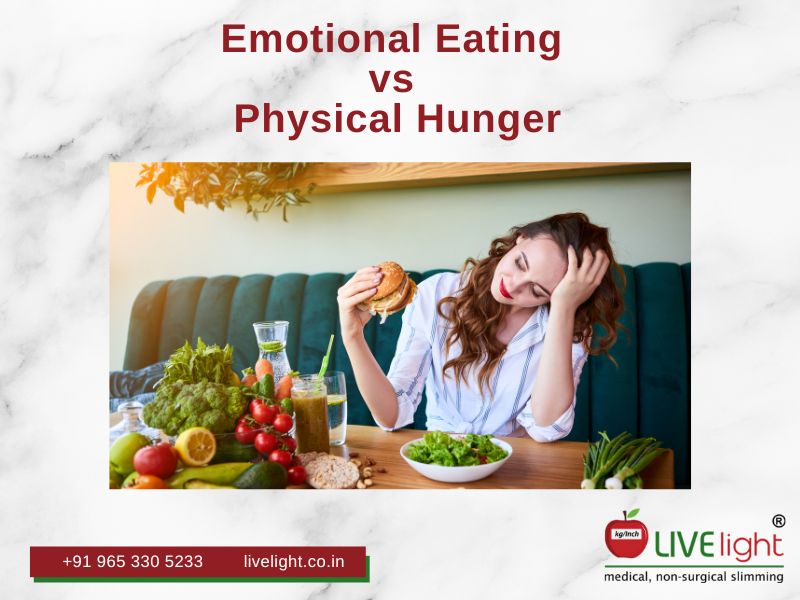
Emotional Eating vs Physical Hunger
Do you often feel the urge to eat when you are stressed, tired, bored, or upset, even after having a proper meal? This may not always be physical hunger. Emotional eating is a common pattern where feelings and situations influence your food choices and eating habits. Understanding the difference between emotional eating and physical hunger can help you take better control of your health and weight goals. This blog explains the signs, causes, management strategies, and when professional guidance can help you build healthier eating habits.
What Is Physical Hunger?
Physical hunger is your body’s natural way of telling you that it needs energy. It usually develops gradually and can be satisfied with a balanced meal. You may notice signs such as stomach emptiness, low energy, difficulty concentrating, or mild weakness.
When you experience physical hunger, you are generally open to different food options. A nutritious meal containing protein, fibre, healthy fats, and carbohydrates can make you feel satisfied. You also stop eating when your body receives enough energy.
For example, if you skip lunch and feel hungry after a few hours, your body is responding to its energy needs. This type of hunger supports normal body functions and does not usually create strong cravings for specific foods.
What Is Emotional Eating?
Emotional eating occurs when you eat because of emotions rather than physical hunger. Stress, anxiety, sadness, boredom, frustration, or even happiness can trigger the desire to eat.
Many people experience cravings for foods such as sweets, fried snacks, or processed foods during emotional moments. These foods may provide temporary comfort, but repeated emotional eating can affect weight management and overall health.
Common signs of emotional eating include:
- Eating suddenly without feeling physically hungry
- Craving specific foods, especially sugary or high-calorie foods
- Eating even after feeling full
- Using food as a reward or stress-relief method
- Feeling guilty after eating
Recognising these patterns helps you understand whether your body needs food or whether your emotions are influencing your eating behaviour.
Emotional Eating vs Physical Hunger: Understanding the Difference
Knowing the difference between emotional eating and physical hunger can help you make mindful food choices.
Physical Hunger
- Develops slowly
- Can be satisfied with different foods
- Stops after you feel full
- Happens due to your body’s energy requirements
Emotional Hunger
- Appears suddenly
- Creates cravings for specific comfort foods
- May continue even after eating
- Is often connected with emotions or situations
A simple way to identify the difference is to ask yourself: “Would I eat a healthy meal right now, or do I only want a particular food?”
If you are hungry enough to eat a balanced meal, it is more likely physical hunger. If you only want a specific snack or sweet food, emotions may be playing a role.
Why Emotional Eating Can Make Weight Management Difficult
Emotional eating can make it harder to maintain healthy weight because it often leads to eating beyond your body’s requirements. Frequent episodes may increase calorie intake and create a cycle of cravings, overeating, and guilt.
Weight gain is not always caused by food choices alone. Factors such as stress levels, sleep patterns, hormones, metabolism, and medical conditions can also influence appetite and hunger signals.
A professional evaluation at an obesity management clinic can help identify the factors affecting your weight. Specialists assess your eating behaviour, medical history, lifestyle habits, and metabolic health before suggesting a personalised approach.
At an Obesity Clinic thane Mumbai, individuals struggling with repeated weight gain or difficulty controlling cravings can receive guidance focused on long-term weight management rather than short-term solutions.
How Stress and Hormones Influence Hunger
Your hunger and fullness signals are controlled by complex processes in the body. Hormones such as ghrelin and leptin help regulate appetite, while stress hormones like cortisol can influence food cravings.
Poor sleep, chronic stress, and irregular eating patterns may increase the desire for high-calorie foods. Some people may also experience stronger hunger signals due to insulin resistance or other metabolic concerns.
This is why weight management requires more than simply following a diet plan. Understanding the reason behind cravings can help create a treatment approach that fits your health needs.
Ways to Manage Emotional Eating
1. Identify Your Triggers
Start noticing when emotional eating happens. Maintain a simple record of what you ate, your emotions at that time, and the situation that triggered the craving.
2. Practice Mindful Eating
Eat without distractions and focus on your hunger and fullness signals. Eating slowly allows your brain enough time to recognise satisfaction.
3. Create Healthy Coping Strategies
Instead of turning to food during emotional moments, try activities such as walking, exercising, journaling, relaxation techniques, or talking with someone you trust.
4. Get Professional Guidance
If emotional eating is affecting your weight, confidence, or daily routine, consulting a specialist can help. A structured plan can address eating patterns, lifestyle factors, and medical concerns.
A consultation at an Obesity Clinic in Thane can help you understand the reasons behind weight challenges and create a personalised weight management plan.
How Medical Weight Management Helps With Emotional Eating
Successful weight management focuses on understanding the complete picture. Doctors evaluate factors such as BMI, body composition, eating patterns, metabolic health, and previous weight loss attempts.
Modern Obesity Treatment in Mumbai focuses on personalized care that may include nutrition guidance, lifestyle modification, medical therapies, and regular follow-ups depending on individual health needs. Live light clinic thane mumbai provides doctor-led weight management programs that focus on personalised assessment and evidence-based approaches for individuals looking for structured obesity care.
Book Consultation with Dr. Swati Pradhan
If you're struggling with emotional eating, frequent cravings, or difficulty managing your weight, expert guidance can help you understand the factors affecting your health and create a personalized weight management plan.
Book a consultation with Dr. Swati Pradhan at LiveLight Clinic to identify the reasons behind your weight challenges and explore evidence-based treatment options.
A structured, medically guided approach can help you:
- Understand your eating patterns
- Improve metabolic health
- Manage weight sustainably
- Build healthier long-term habits
Frequently Asked Questions
Conclusion
Emotional eating and physical hunger may feel similar, but they are caused by different signals from your body and mind. Learning to recognise your eating patterns is an important step toward better health. If cravings, stress eating, or weight gain are affecting your lifestyle, seeking guidance from a trusted Live light clinic in Thane, Mumbaican help you understand your needs and receive personalised support. A medically guided approach can help you build healthier habits and achieve long-term weight management goals.