Fat Dissolving Injections: How Do They Work and Are They Effective?
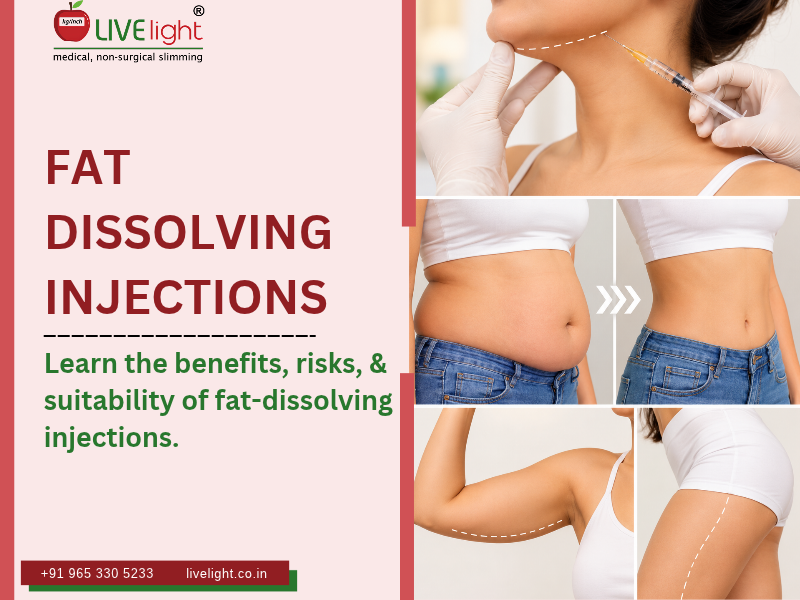
Fat dissolving injections, also known as lipolytic injections or injection lipolysis, are injectable treatments intended to reduce selected pockets of localised fat. They are sometimes considered by people who want to improve the contour of a specific area without undergoing surgical fat removal.
But how do fat dissolving injections work? Are they effective for everyone? What are the possible side effects, and how do they compare with other body contouring treatments?
In this guide, LiveLight Clinic explains the mechanism, potential benefits, limitations, safety considerations, and factors to discuss with a qualified medical professional before considering treatment.
What Are Fat Dissolving Injections?
Fat dissolving injections are injectable formulations designed to disrupt fat cells in a targeted area. The treatment is also called lipolytic injection therapy, fat reduction injections, or injection lipolysis.
Depending on the formulation, these injections may contain substances that damage fat cell membranes. The body's subsequent inflammatory and clearance processes help remove cellular debris over time.
The ingredients, approved uses, clinical evidence, and safety profiles differ between products. Therefore, the term “fat dissolving injections” should not be understood as referring to one standard treatment.
Unlike medical weight management, which focuses on overall body weight and related health concerns, injection lipolysis is intended for selected localised fat deposits. It is not a treatment for obesity and should not be presented as a substitute for a balanced diet, physical activity, or medically supervised weight management.
How Do Fat Dissolving Injections Work?
The mechanism depends on the active ingredient used in the injection. Certain formulations can damage fat cells in the treated area, after which the body gradually clears the resulting cellular material.
The process can be understood in three broad stages.
1. Assessment of the Treatment Area
A qualified medical professional evaluates the area of concern, the amount and location of subcutaneous fat, skin quality, medical history, and suitability for treatment.
Not every area of fullness is caused by localised fat. Loose skin, muscle structure, and other medical conditions can also influence body shape.
2. Targeted Injection
If treatment is appropriate, the selected formulation is administered into the intended tissue by a qualified professional using the product-specific technique.
The formulation matters. For example, deoxycholic acid has a specific role in treating submental fat, the fat beneath the chin, in adults when used in accordance with its approved prescribing information. Evidence for this use should not automatically be applied to injections marketed for the abdomen, arms, thighs, or other body areas.
3. Gradual Tissue Response
Following treatment, the body responds to the affected cells and gradually clears cellular debris. Any visible change develops over time and can vary according to the formulation, treatment area, individual response, and number of sessions.
Results are not immediate or guaranteed. Follow-up assessment is important to evaluate the response and determine whether additional treatment is appropriate.
Are Fat Dissolving Injections Effective?
Fat dissolving injections can be effective for selected indications, but their effectiveness depends on the specific product, treatment area, and individual circumstances.
Clinical research supports the use of certain deoxycholic acid injections for reducing submental fat in appropriately selected adults. However, this evidence does not establish that all lipolytic formulations are effective or safe for every body area.
Before deciding whether the treatment is suitable, consider the following factors:
- Treatment indication: Evidence for one formulation or anatomical area may not apply to another.
- Amount of localised fat: The treatment is intended for selected fat deposits rather than substantial overall weight reduction.
- Skin quality: Loose skin may remain even if the volume of underlying fat decreases.
- Individual response: The degree of visible improvement varies between patients.
- Treatment and follow-up: The number of sessions and the interval between them depend on the product and clinical assessment.
A medical consultation can help establish realistic expectations and identify alternatives when injections are unlikely to address the concern effectively.
Which Areas Can Be Treated with Fat Dissolving Injections?
The suitability of injection lipolysis depends on the active ingredient, the approved indication, and the anatomical area.
Double Chin
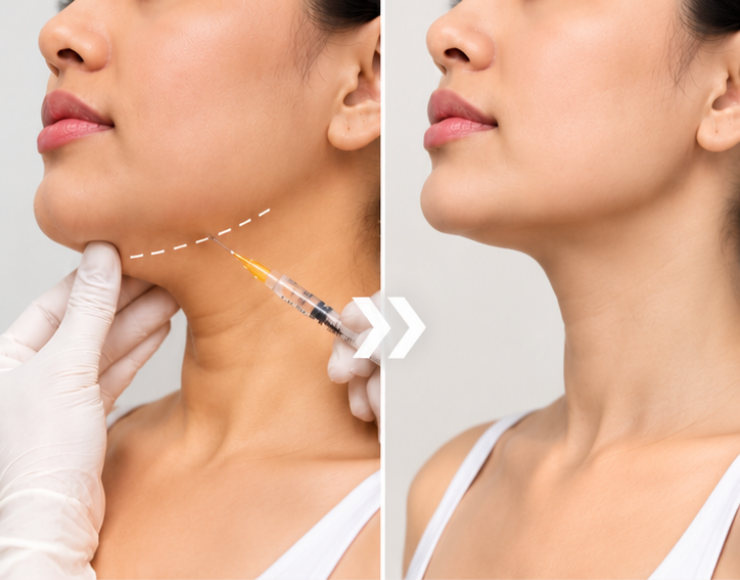
Submental fat is the area beneath the chin. Certain deoxycholic acid formulations have clinical evidence and regulatory approval for reducing submental fat in adults in specific jurisdictions.
A clinician must assess the cause of fullness, skin laxity, anatomy, and possible risks before recommending treatment.
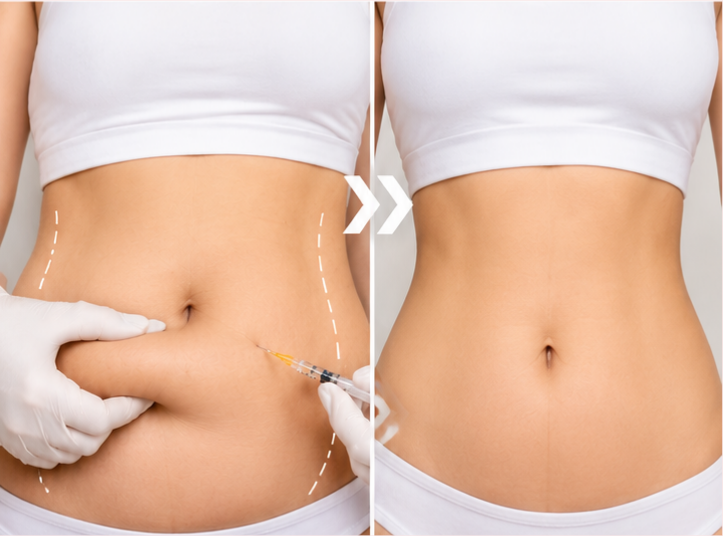
Abdomen and Waist
People sometimes search for belly fat dissolving injections or love-handle reduction injections when looking to improve localised body contours.
However, the evidence and regulatory status of injectable treatments for these areas vary. A product supported for submental fat should not be assumed to be suitable for abdominal or waist fat.
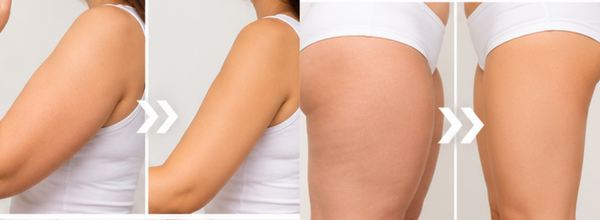
Arms and Thighs
Arm fat and thigh contouring are other common areas of interest. The appropriateness of injections in these areas requires particular care because product-specific evidence, anatomical considerations, and safety risks may differ.
A qualified clinician can discuss whether another body contouring approach would be more appropriate.
Important: Availability of a treatment in the market does not, by itself, establish its safety, effectiveness, or regulatory approval for a particular body area.
What Are the Possible Side Effects of Fat Dissolving Injections?
Fat dissolving injections are medical procedures and can cause adverse reactions. The type and likelihood of side effects depend on the formulation, injection technique, treatment area, and individual health factors.
Possible reactions include:
- Pain, tenderness, swelling, or redness at the injection site
- Bruising and temporary numbness
- Firmness or lumps beneath the skin
- Prolonged inflammation or uneven contours
- Infection, scarring, or skin injury
- Nerve injury or other serious complications, depending on the product and injection site
The US Food and Drug Administration has warned about complications associated with unapproved fat-dissolving injections, including serious infections, permanent scars, skin deformities, and painful nodules.
For deoxycholic acid injections, the approved product information also describes risks specific to the treatment area. Patients should be informed about the potential complications before proceeding.
Seek prompt medical assessment if you develop severe or worsening pain, spreading redness, fever, persistent or enlarging lumps, skin changes, facial muscle weakness, an uneven smile, or difficulty swallowing.
Do not purchase injectable products online or attempt to administer them yourself.
Who May Be Suitable for Fat Dissolving Injections?
Suitability must be determined through an individual medical assessment. Depending on the product and its approved indication, a clinician may consider treatment for an adult with a specific, localised fat deposit.
The assessment should consider:
- Medical history and current medications
- The location and characteristics of the fat deposit
- Skin laxity and underlying anatomy
- Previous cosmetic procedures and any complications
- Allergies, relevant health conditions, and other contraindications
- The evidence, regulatory status, and risks of the proposed formulation
Treatment may be unsuitable for some individuals. Pregnancy, breastfeeding, active infection at the treatment site, certain medical conditions, or other product-specific contraindications may affect eligibility.
A consultation does not guarantee that injections will be recommended. Other options may better address the patient's concerns.
Fat Dissolving Injections vs Other Body Contouring Treatments
Different body contouring treatments address different concerns. They should not be considered interchangeable.
| Treatment | Main purpose | Important consideration |
|---|---|---|
| Fat dissolving injections | Targeted reduction of selected fat deposits | Product-specific evidence and safety must be assessed |
| Liposuction | Surgical removal of localised fat | Involves surgery, recovery, and surgical risks |
| Energy-based body contouring | May target selected fat deposits or tissue tightening, depending on the device | Results and suitability vary by technology |
| Medical weight management | Management of excess body weight and related health concerns | Requires an individualised health assessment |
The most appropriate option depends on the treatment goal, health status, anatomical area, expected benefit, and willingness to accept the associated risks.
For a broader overview of available approaches, explore LiveLight Clinic's body contouring treatment information.
How Long Does It Take to See Results?
There is no single timeline that applies to all fat dissolving injections.
Visible changes may develop gradually over several weeks or longer, depending on the formulation, treatment area, and individual response. Some approved protocols involve multiple sessions separated by specified intervals.
The treating clinician should explain the expected timeline, appropriate follow-up schedule, and criteria for assessing improvement before treatment begins.
Avoid relying on fixed promises such as guaranteed results after a specific number of sessions. Outcomes vary, and additional sessions may not always be appropriate.
Are Fat Dissolving Injections a Weight Loss Treatment?
No. Fat dissolving injections are intended for selected localised fat deposits, not general weight loss or the treatment of obesity.
They do not replace evidence-based weight management, which may include nutrition changes, physical activity, behavioural support, and medical treatment when indicated.
People with concerns about overall body weight should discuss suitable options with a qualified healthcare professional rather than using local fat reduction procedures as a substitute for medical weight management.
Considering Fat Dissolving Injections at LiveLight Clinic?
Choosing a body contouring treatment starts with understanding the concern you want to address and identifying an appropriate, evidence-based option.
At LiveLight Clinic, patients can enquire about body contouring and discuss their treatment goals with the clinical team. A consultation should establish whether the concern relates to localised fat, loose skin, overall body weight, or another factor before any procedure is considered.
LiveLight Clinic has locations in Dadar and Thane, Maharashtra. To learn more about the clinic's available services, visit the LiveLight Clinic website.
Before proceeding with any injectable treatment, ask about the exact product and active ingredient, its regulatory status for the intended use, supporting clinical evidence, possible complications, alternatives, and follow-up care.
Frequently Asked Questions About Fat Dissolving Injections
Conclusion
Fat dissolving injections may help reduce selected localised fat deposits when an appropriate formulation is used for a supported indication. Their effectiveness, safety, and expected results depend on the product, anatomical area, and individual circumstances.
Before choosing treatment, seek a qualified medical assessment, understand the evidence and possible risks, and compare alternative options. An informed decision is more important than promises of rapid or guaranteed body contouring results.
Medical disclaimer: This article is intended for general educational purposes and does not replace an individual consultation, diagnosis, or treatment recommendation. The availability and regulatory status of injectable products vary by jurisdiction and indication. Treatment decisions should be based on the applicable product information, current evidence, and assessment by a qualified medical professional.