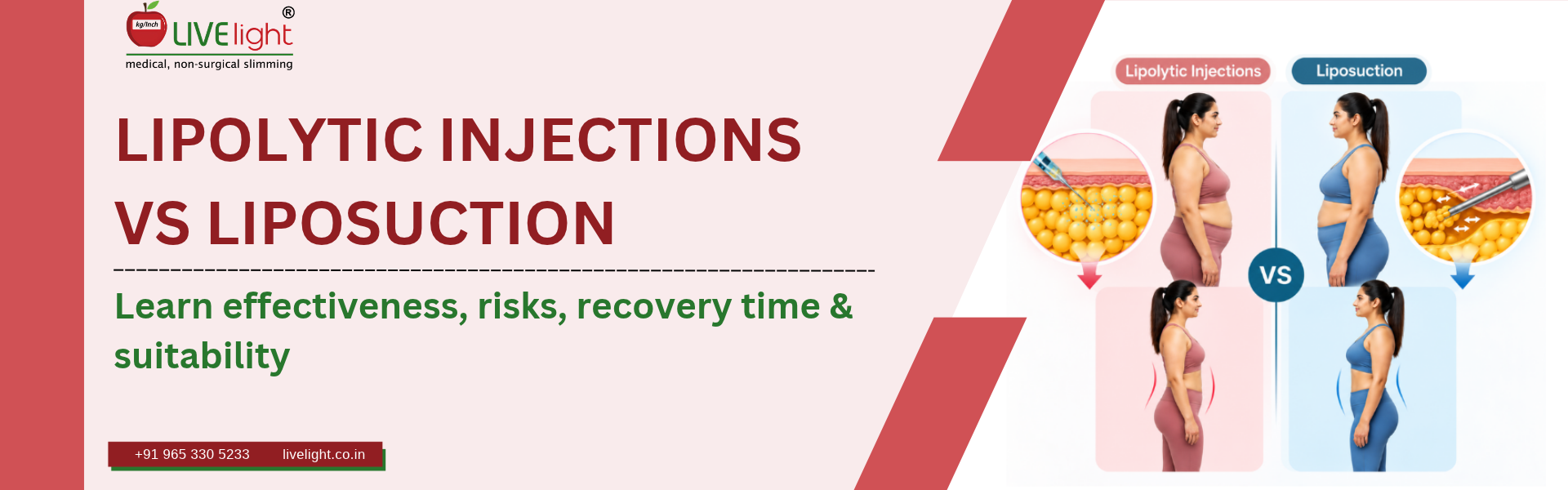
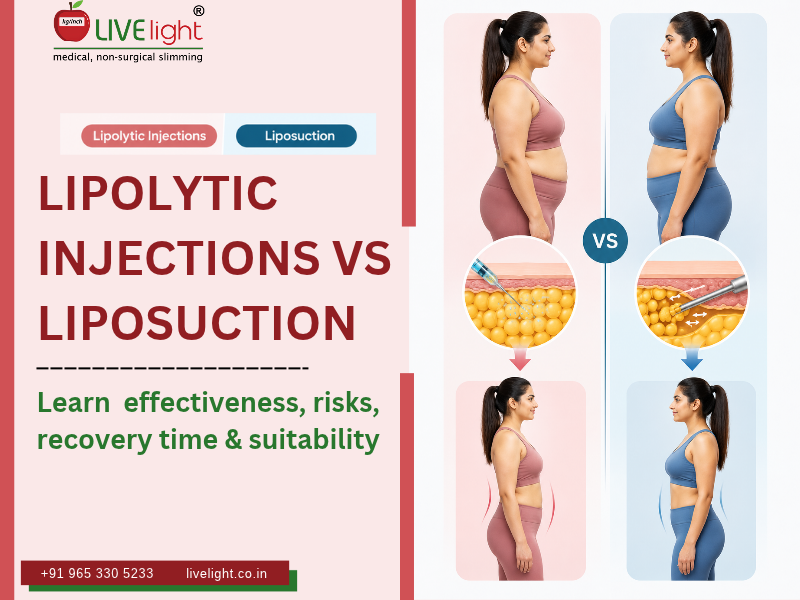
Lipolytic Injections vs Liposuction: Which Is Right for You?
If you are looking to reduce stubborn fat deposits, you may have come across two options: lipolytic injections and liposuction. Both are associated with body contouring, but they work differently, involve different levels of intervention, and are suitable for different treatment goals.
Lipolytic injections are injectable treatments intended to reduce selected localised fat deposits, whereas liposuction is a surgical procedure that removes fat through suction. The right option depends on the treatment area, the amount of fat, your health, your expectations, and the evidence supporting the specific treatment.
At LiveLight Clinic, we believe that understanding the available options is an important first step towards making an informed decision. This guide compares lipolytic injections and liposuction, including their procedures, potential results, recovery, risks, and suitability.
What Are Lipolytic Injections?
Lipolytic injections, commonly called fat dissolving injections, are injectable formulations intended to disrupt fat cells in a targeted area. The body subsequently clears cellular debris through its natural processes.
The term “lipolytic injections” covers different formulations, and their ingredients, clinical evidence, approved uses, and safety profiles are not interchangeable.
Certain deoxycholic acid injections, for example, have established clinical use for reducing submental fat, which is the fat beneath the chin, in appropriately selected adults. Evidence for this indication should not automatically be applied to injections marketed for the abdomen, arms, thighs, or other body areas.

How Do Lipolytic Injections Work?
The process generally involves three stages:
- Clinical assessment: A qualified medical professional evaluates the area of concern, medical history, skin quality, and suitability for the specific formulation.
- Targeted administration: If appropriate, the injection is administered into the intended tissue using the product-specific technique.
- Gradual response: The body responds to the affected cells and clears cellular debris over time. Any visible change develops gradually and varies between individuals.
Depending on the product and indication, multiple sessions may be required. Results are not guaranteed, and the treatment is not intended to replace overall weight management.
What Is Liposuction?
Liposuction is a surgical procedure used to remove localised deposits of fat from selected areas of the body. It is performed by a suitably qualified surgeon in an appropriate clinical setting.
During the procedure, small incisions are made, and a thin tube called a cannula is inserted into the treatment area. The cannula is used to loosen and remove fat through suction.
Liposuction may be considered for areas such as the abdomen, waist, thighs, hips, back, and upper arms, depending on the patient's anatomy and clinical assessment.
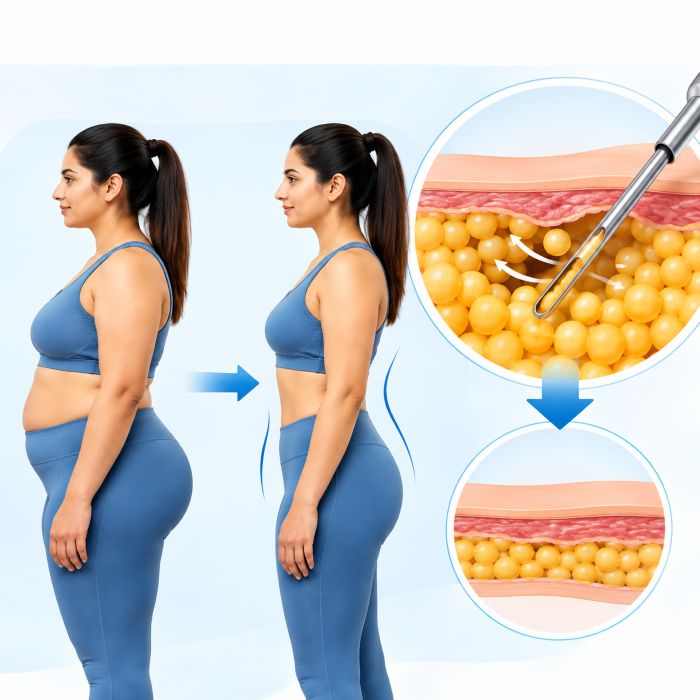
How Does Liposuction Work?
The procedure typically involves the following stages:
- Preoperative assessment: The surgeon reviews medical history, medications, body contour concerns, skin elasticity, and surgical risks.
- Surgical fat removal: The procedure is performed using an appropriate anaesthetic and surgical technique.
- Recovery and healing: Swelling, bruising, and temporary discomfort may occur. Compression garments and follow-up appointments may be recommended according to the surgeon's instructions.
- Assessment of results: Contours become more apparent as swelling subsides, although the recovery timeline varies.
Liposuction can produce a more substantial change in selected fat deposits than may be achievable with an injectable treatment. However, it involves surgery and does not guarantee a particular appearance.
Lipolytic Injections vs Liposuction: Key Differences
The main difference is how the fat is treated: lipolytic injections use a specific injectable formulation to disrupt selected fat cells, whereas liposuction surgically removes fat from the treatment area.
| Factor | Lipolytic injections | Liposuction |
|---|---|---|
| Treatment type | Injectable procedure | Surgical procedure |
| How it works | Certain formulations disrupt targeted fat cells | Fat is physically removed through suction |
| Anaesthesia | Depends on the formulation and procedure | Depends on the surgical technique and extent of treatment |
| Treatment areas | Depends on the specific product and supported indication | Several body areas may be considered following surgical assessment |
| Extent of fat reduction | Generally intended for selected localised deposits | Can remove larger amounts of localised fat in appropriately selected patients |
| Number of treatments | May require multiple sessions | Often performed as a single operation for the planned areas, although further procedures may sometimes be considered |
| Recovery | Often involves temporary swelling, tenderness, or bruising | Usually involves a longer recovery, with swelling, bruising, and activity restrictions |
| Risks | Include inflammation, lumps, infection, tissue injury, and product-specific complications | Include bleeding, infection, fluid accumulation, contour irregularities, anaesthetic complications, and other surgical risks |
| Overall weight loss | Not a weight loss treatment | Not a treatment for obesity or a substitute for weight management |
Neither option is suitable for everyone. The choice should be based on clinical assessment rather than the assumption that one approach is universally better.
Which Treatment Is More Effective?
Neither lipolytic injections nor liposuction is the best choice for every person. Their effectiveness should be assessed in relation to the treatment goal, anatomical area, and evidence for the procedure.
When Lipolytic Injections May Be Considered
An injectable treatment may be considered when the concern involves a specific localised fat deposit and the proposed formulation has appropriate evidence and regulatory status for that use.
For example, certain deoxycholic acid injections have demonstrated effectiveness for reducing submental fat in appropriately selected adults.
However, the results of one approved formulation cannot be generalised to every product sold as a fat dissolving injection. The expected degree of improvement also varies.
When Liposuction May Be Considered
Liposuction may be considered when a patient wants a more substantial reduction in localised fat and is medically suitable for surgery.
The surgeon will evaluate the amount and distribution of fat, skin elasticity, general health, and realistic expectations. Liposuction may not address loose skin adequately, and additional procedures are not automatically necessary or appropriate.
What If Your Main Concern Is Overall Weight?
Neither lipolytic injections nor liposuction should be considered a substitute for evidence-based weight management.
If your primary goal is to manage excess body weight or obesity, a healthcare professional can discuss appropriate options based on your health, preferences, and medical needs.
Lipolytic Injections vs Liposuction: Which Has a Shorter Recovery?
Recovery depends on the exact procedure, treatment area, individual response, and any complications.
Recovery After Lipolytic Injections
Injectable treatments are generally less invasive than surgery, but they can still cause significant local reactions.
Possible effects include swelling, tenderness, bruising, numbness, firmness, and lumps. Some reactions may persist longer than expected, and serious complications can occur.
The treating clinician should explain the expected recovery period, aftercare, warning signs, and follow-up requirements for the specific product.
Recovery After Liposuction
Liposuction involves surgical healing. Patients may experience swelling, bruising, discomfort, and temporary limitations on their usual activities.
A compression garment may be recommended, and the timing of return to work, exercise, and other activities should be guided by the surgeon. Swelling can take weeks or longer to settle, and the final contour may take several months to become apparent.
Important: A shorter or less invasive procedure does not automatically mean risk-free treatment. Recovery and complications should be discussed before choosing either option.
What Are the Risks and Side Effects?
Every medical procedure involves potential risks. Understanding them is essential when comparing body contouring options.
Possible Risks of Lipolytic Injections
Depending on the formulation and treatment area, potential complications include:
- Pain, swelling, redness, and bruising
- Firmness, nodules, or persistent lumps
- Infection, scarring, or skin injury
- Uneven contours or unwanted tissue changes
- Nerve injury or other serious complications in certain anatomical areas
The US Food and Drug Administration has warned about adverse reactions from unapproved fat-dissolving injections. Certain deoxycholic acid products are approved for a specific area beneath the chin in the United States, not for general fat reduction throughout the body.
The applicable regulatory status in India must be verified separately.
Possible Risks of Liposuction
Liposuction carries risks associated with surgery, anaesthesia, and the removal of tissue. Potential complications include:
- Bleeding, infection, and fluid accumulation
- Persistent swelling, bruising, or discomfort
- Changes in skin sensation
- Irregular contours or asymmetry
- Scarring, skin injury, or delayed healing
- Blood clots, fluid shifts, or other serious complications in some cases
The likelihood of complications depends on factors such as the patient's health, the extent of the procedure, the surgical technique, and postoperative care.
A qualified medical professional should explain the material risks and alternatives relevant to your individual circumstances.
Who May Be a Suitable Candidate for Each Treatment?
Suitability depends on the treatment, health status, anatomical area, and expected benefit.
You May Be Assessed for Lipolytic Injections If:
- You have a specific localised fat deposit that is appropriate for the proposed formulation.
- You understand that the degree of improvement may be modest or variable.
- You are medically suitable for the injection and do not have relevant contraindications.
- You understand the product's evidence, regulatory status, potential complications, and aftercare requirements.
You May Be Assessed for Liposuction If:
- You have localised fat deposits that may benefit from surgical removal.
- Your general health allows you to undergo surgery and anaesthesia, as applicable.
- Your expectations are realistic about the outcome and recovery.
- You understand the risks, limitations, and postoperative requirements.
Neither treatment should be selected solely because it is marketed as a quick solution. A clinician may recommend a different approach if it better addresses the concern.
Can Lipolytic Injections Replace Liposuction?
Not necessarily. The treatments differ in mechanism, potential extent of fat reduction, supporting evidence, and risk profile.
Lipolytic injections may be appropriate for selected indications where the specific formulation is supported by clinical evidence. Liposuction may be more suitable when surgical removal of a larger localised fat deposit is the intended goal.
An injection treatment should not be presented as a direct substitute for surgery when the expected outcome cannot reasonably be achieved with that formulation.
The most appropriate approach is to discuss the available evidence, expected improvement, alternatives, and risks with a qualified medical professional.
Are the Results Permanent?
The answer depends on the procedure and what is meant by “permanent.”
Liposuction physically removes fat cells from the treated area. Certain injectable formulations can also disrupt targeted fat cells. However, neither procedure prevents changes in body weight or guarantees that the treated area will retain the same appearance indefinitely.
Remaining fat cells can change in size, and changes in weight, ageing, skin elasticity, and other factors may influence body contours.
Maintaining a stable weight and following appropriate health advice can help support longer-term results, but individual outcomes vary.
Lipolytic Injections vs Liposuction: How Do You Choose?
Before deciding, consider the following questions:
- What is your primary concern? Is it a small, localised fat deposit, a larger area of fat, loose skin, or overall body weight?
- What evidence supports the treatment? Is the proposed injectable formulation supported for the intended anatomical area?
- What degree of change is realistic? Ask about the expected outcome and the limitations of each option.
- What risks are involved? Consider injection-related complications as well as surgical and anaesthetic risks.
- What recovery can you accommodate? Think about work, exercise, daily activities, and follow-up appointments.
- What alternatives are available? Another procedure—or no procedure—may be more appropriate for your goals.
A medical consultation should provide enough information for you to make an informed decision without pressure or guarantees of a particular result.
Exploring Body Contouring Options at LiveLight Clinic, Thane, Mumbai
If you are researching body contouring treatments, the first step is to identify the concern you want to address and understand which options may be clinically appropriate.
LiveLight Clinic provides information about its aesthetic services through its website. You can explore the available body contouring treatment information and fat dissolving injections information.
A consultation with an appropriately qualified medical professional can help clarify the available options, expected benefits, potential risks, and whether further assessment or referral is needed.
Before proceeding with an injectable or surgical treatment, ask about the exact product or procedure, the clinician's qualifications, relevant evidence, regulatory status, recovery requirements, and arrangements for managing complications.
Frequently Asked Questions
Conclusion
Lipolytic injections and liposuction address localised fat through different approaches. Injectable treatments may be considered for specific indications supported by appropriate evidence, while liposuction offers surgical removal of selected fat deposits in suitable patients.
There is no single best option for everyone. The decision should take into account the treatment goal, medical suitability, evidence, expected outcome, risks, and recovery requirements.
An informed discussion with a qualified medical professional can help you understand your options and decide whether a body contouring procedure is appropriate for you.
Medical disclaimer: This article is intended for general educational purposes and does not replace an individual medical consultation, diagnosis, or treatment recommendation. The safety, effectiveness, and regulatory status of injectable formulations vary by product, anatomical area, and jurisdiction. Surgical and injectable procedures should be considered only after an appropriate clinical assessment.