Why Choose Glutathione IM Injections Over IV Drips? Convenience, Cost & Safety
When it comes to skin-brightening treatments, glutathione has become a widely discussed ingredient. Traditionally associated with IV drip therapy, glutathione is also available in intramuscular (IM) injection formulations.
But do you really need to sit through an IV drip when an injection can be administered in much less time?
This is one of the reasons people are exploring glutathione IM injections instead of IV drips. IM administration does not require intravenous access, usually involves a shorter procedure, and may have lower administration costs.
However, convenience is not the same as effectiveness. While both methods deliver glutathione into the body, neither has sufficient clinical evidence to establish reliable skin-brightening results.
Understanding these differences can help you make a more informed decision about your skin and wellness goals.
What Are Glutathione IM Injections?
Glutathione is a naturally occurring antioxidant found in the body's cells. It helps protect cells from oxidative stress and supports normal cellular functions.
In aesthetic medicine, glutathione has attracted interest because researchers have investigated its possible influence on melanin production, which determines skin pigmentation.
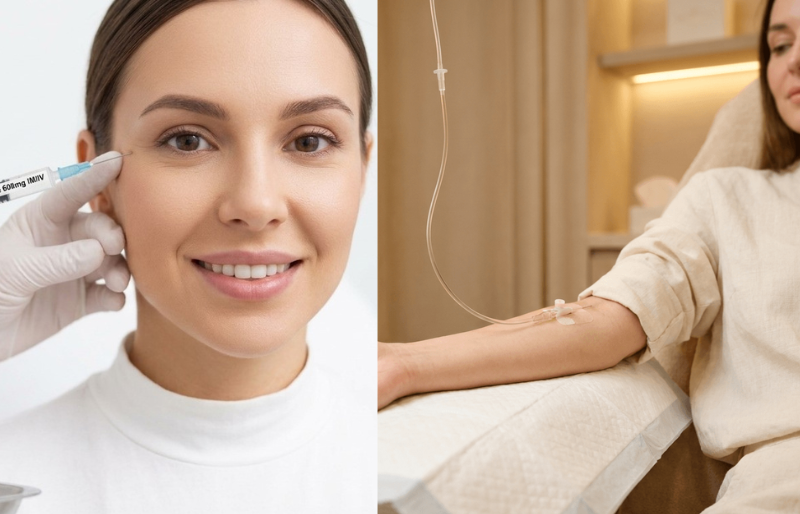
Glutathione intramuscular (IM) injections involve administering glutathione directly into muscle tissue, usually in the upper arm or another appropriate injection site.
After administration, glutathione is absorbed from the muscle into the bloodstream.
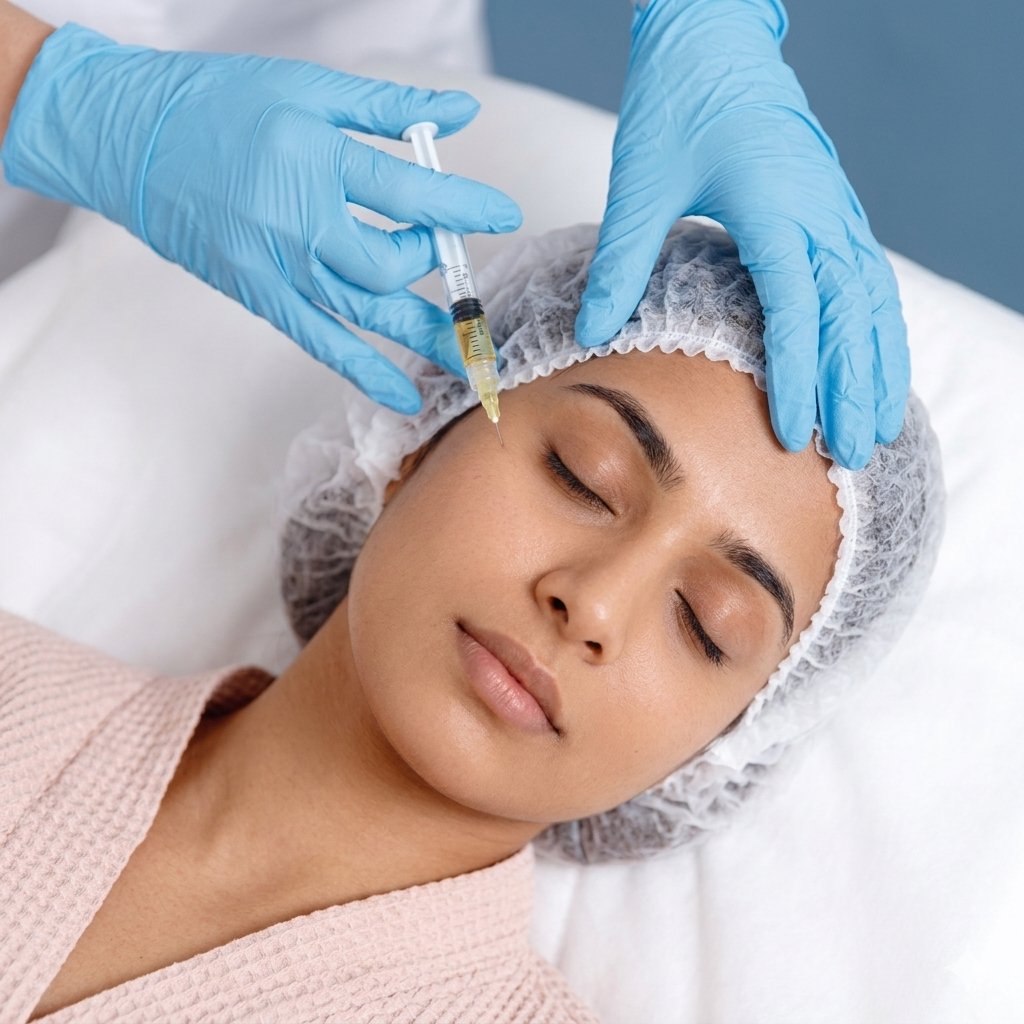
Unlike IV drips, IM injections do not require placing a cannula into a vein or connecting the patient to an infusion system.
This makes the procedure relatively straightforward, although medical assessment and appropriate administration remain essential.
How Are Glutathione IM Injections Different From IV Drips?
The main difference lies in how glutathione enters the bloodstream.
With an IM injection, glutathione is injected into muscle tissue and subsequently absorbed into circulation.
With an IV drip, glutathione is administered directly into a vein through an intravenous line.
Both methods involve needles, but the equipment, administration process, and potential complications differ.
| Feature | Glutathione IM Injection | Glutathione IV Drip |
|---|---|---|
| Administration | Into muscle tissue | Directly into a vein |
| IV cannula required | No | Yes |
| Procedure | Generally quicker | Requires an infusion setup |
| Absorption | From muscle into blood | Direct bloodstream delivery |
| Administration cost | May be lower | Often higher |
| Common local discomfort | Muscle soreness or bruising | Vein irritation or bruising |
| Skin-brightening results | Not established | Not reliably established |
Neither method has been shown to produce consistently superior skin-brightening results.
5 Reasons People Consider Glutathione IM Injections Instead of IV Drips
1. No IV Cannula or Drip Setup Required
One of the most noticeable differences is the administration process.
During an IV drip, a healthcare professional inserts a cannula into a suitable vein. The infusion is then administered through an intravenous line.
An IM injection follows a simpler procedure. A healthcare professional administers the injection directly into the selected muscle.
For people who find intravenous cannulation uncomfortable or inconvenient, IM administration may appear more manageable.
However, an IM injection still involves a needle and can cause pain or bruising. Avoiding an IV cannula does not eliminate the risks associated with injectable treatment.
2. A Quicker Administration Process
Time is an important consideration for people with busy schedules.
An IV drip requires preparation, cannulation, administration, and monitoring. Depending on the formulation and clinical protocol, this process can take longer than a straightforward injection.
IM administration itself is generally completed within a few minutes.
For example, someone attending a clinic between work commitments may prefer a shorter procedure instead of spending additional time receiving an infusion.
However, the complete appointment may still include medical evaluation, preparation, and observation.
Important: A quicker procedure does not mean glutathione works faster or produces better cosmetic results.
3. Potentially Lower Treatment Costs
Cost is another reason patients compare glutathione IM injections with IV drips.
IV therapy involves additional equipment, including intravenous cannulas, tubing, compatible infusion solutions, and clinical monitoring.
IM administration generally requires fewer procedural supplies.
As a result, the administration component of an IM injection may cost less than an IV infusion.
However, the final price depends on several factors, including:
- Medication formulation and quantity.
- Healthcare professional fees.
- Consultation and assessment charges.
- Clinic facilities and infection-control arrangements.
- Additional services included in the quotation.
Patients searching for glutathione IM injection cost in Mumbai should request an itemised quotation rather than assuming IM treatment will always be cheaper.
It is also important to remember that a lower price does not make a treatment medically necessary or effective.
4. Less Equipment During Administration
Some people prefer medical procedures that involve minimal equipment.
An IV drip requires access to a vein and uses an infusion system. Depending on the setup, patients may need to remain seated during administration.
An IM injection generally involves fewer supplies and no connected infusion line.
This can make IM administration simpler from a procedural perspective.
However, treatment must still take place in an appropriate clinical setting with trained personnel, sterile supplies, and the ability to manage adverse reactions.
A simpler procedure should never mean compromising medical supervision or safety standards.
5. An Alternative Route When IV Access Is Difficult
Some individuals have veins that are difficult to access. Others may experience discomfort or anxiety associated with intravenous cannulation.
In medical settings, intramuscular administration can sometimes be an alternative for medications specifically suitable for that route.
However, not every injectable medicine can be administered intramuscularly. The formulation must be appropriate for IM use, and a clinician must determine whether the route is suitable.
For cosmetic glutathione, the limited evidence of benefit means that difficulty obtaining IV access is not, by itself, a reason to recommend IM treatment.
Is Glutathione IM Safer Than IV Drip Therapy?
This is an important question.
IM injections avoid certain complications specifically associated with intravenous access, such as inflammation of a vein.
However, this does not establish IM glutathione as safer overall.
Possible side effects of IM injections
- Pain or tenderness at the injection site.
- Temporary swelling or bruising.
- Bleeding or local infection.
- Allergic reactions.
- Muscle or nerve injury if administered incorrectly.
The long-term safety of repeated IM glutathione injections for cosmetic purposes has not been adequately studied.
Possible side effects of IV glutathione
- Bruising or irritation at the cannula site.
- Inflammation or infection of the vein.
- Infusion-related complications.
- Allergic reactions, including potentially severe reactions.
- Possible liver or kidney-related adverse effects reported in the literature.
Published reviews have raised significant concerns about IV glutathione used for cosmetic skin lightening.
The key takeaway: Both routes have potential risks. Neither should be considered risk-free, and there is insufficient comparative research to conclude that IM glutathione is safer for cosmetic use.
Does Glutathione IM Work as Well as IV for Skin Brightening?
Many people assume IV glutathione provides better results because it enters the bloodstream directly.
Others believe IM injections may offer similar benefits with a simpler procedure.
Neither assumption has been adequately confirmed by clinical studies.
Research has explored how glutathione may influence melanin production, but evidence demonstrating meaningful cosmetic benefits from injectable glutathione remains limited.
Most published skin-pigmentation research has focused on oral, topical, or intravenous glutathione. Direct clinical evidence supporting IM glutathione for cosmetic skin brightening is particularly lacking.
There are also no strong head-to-head clinical trials establishing whether IM or IV administration produces better or longer-lasting results.
Therefore, it would be misleading to promise that IM glutathione injections deliver the same, faster, or better skin-brightening results than IV drips.
How Long Do Glutathione IM Injections Take to Show Results?
There is currently no scientifically established timeline for visible cosmetic results from IM glutathione injections.
You may encounter promotional claims suggesting that skin becomes brighter after a specific number of sessions.
However, reliable studies have not established a standard IM dosage, treatment frequency, or number of sessions for skin brightening.
Changes in skin appearance can also depend on several factors, including sun exposure, pigmentation disorders, skincare habits, and underlying medical conditions.
Before committing to repeated injections, patients should discuss whether the proposed treatment is supported by sufficient medical evidence.
Who Should Consider Alternatives to Injectable Glutathione?
Not everyone experiencing dull skin or pigmentation needs an injectable treatment.
For example, a person with acne marks may benefit from topical pigmentation treatments, while someone with melasma may need a combination of sun protection and dermatologist-prescribed medication.
Similarly, skin dullness caused by irritation, dehydration, or an underlying health concern requires a different approach.
Rather than choosing between IM and IV administration immediately, it is worth asking whether glutathione is appropriate for the concern in the first place.
A qualified medical professional can help identify the cause of skin changes and discuss treatments with a stronger evidence base.
Glutathione IM vs IV: What Should You Choose?
The choice between IM and IV administration should not be based on convenience alone.
IM injections offer practical differences, including shorter administration and no IV cannula. IV delivery provides direct access to the bloodstream but requires a more involved procedure.
Neither option has sufficient evidence supporting routine use for cosmetic skin brightening.
If your primary concern is pigmentation or uneven skin tone, a dermatologist-led assessment and evidence-based treatment plan may be more appropriate.
Before considering any injectable glutathione treatment, discuss the available clinical evidence, product suitability, potential side effects, and alternative approaches with a qualified healthcare professional.
Explore Doctor-Led Wellness Care at LIVE Light Clinic, Mumbai and Thane
At LIVE Light Clinic, led by Dr. Swati Pradhan, the focus is on personalised, doctor-led care.
LIVE Light lists glutathione IV drip therapy among its supportive wellness services.
For people exploring antioxidant-based treatments, a medical consultation provides an opportunity to understand the available options, possible risks, and limitations of current scientific evidence.
LIVE Light has locations in Dadar, Mumbai, and Thane, including Hiranandani Meadows and Khopat.
Visit LIVE Light Clinic to explore its services and consultation options.
Conclusion
Glutathione IM injections may seem more convenient than IV drips because they do not require intravenous access, generally take less time to administer, and may involve lower procedural costs.
These are practical differences, not proof of improved safety or cosmetic effectiveness.
The clinical evidence supporting both IM and IV glutathione for skin brightening remains insufficient, and long-term injectable use raises unanswered safety questions.
Before choosing any skin-brightening treatment, focus on your individual skin concerns, the quality of the medical evidence, and the potential risks.
When it comes to skin health, informed treatment decisions matter more than convenience alone.