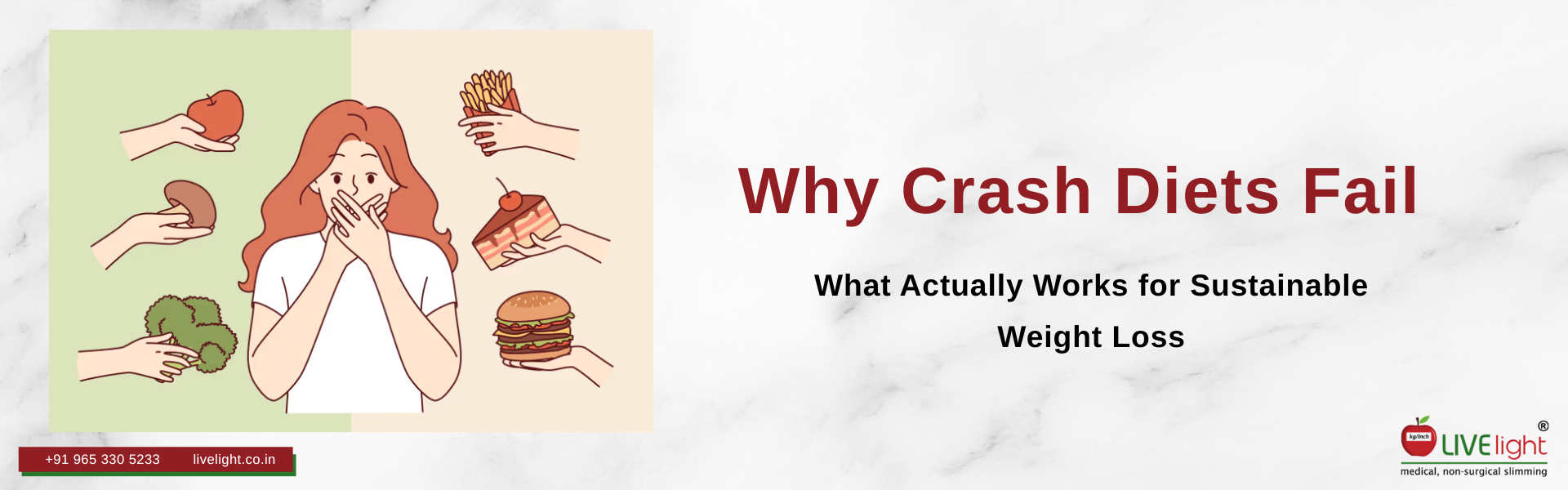
Why Crash Diets Fail & What Actually Works for Sustainable Weight Loss
“Lose 10 kilos in 10 days.”
“Detox your body instantly.”
“Eat almost nothing and melt fat fast.”
Crash diets are everywhere.
And at first, they often seem to work.
You lose weight quickly.
The number on the scale drops.
People start noticing changes.
But then something happens:
- Weight loss slows down
- Cravings increase
- Energy crashes
And eventually… the weight comes back. Sometimes even more than before.
If this sounds familiar, you’re not alone.
The truth is, crash diets are one of the biggest reasons people struggle with long-term weight management.
Why Quick Weight Loss Feels So Tempting
Most people don’t start crash dieting because they’re careless. They start because they’re frustrated.
Usually after:
- Trying multiple diets
- Not seeing results fast enough
- Feeling pressure before events or vacations
- Comparing themselves online
Crash diets promise:
- Fast transformation
- Rapid fat loss
- Instant confidence
But the body doesn’t work that way.
What Actually Happens During a Crash Diet?
When calorie intake becomes extremely low, the body enters survival mode.
It thinks: “Food is scarce. I need to conserve energy.”
As a result:
- Metabolism slows down
- Muscle loss increases
- Hunger hormones rise
- Fat burning becomes less efficient
This is why extreme dieting rarely creates sustainable results.
The Weight You Lose Isn’t Always Fat
One of the biggest misconceptions is: “Fast weight loss = successful fat loss”
In reality, early crash diet weight loss often comes from:
- Water loss
- Muscle loss
- Glycogen depletion
- Not actual long-term fat reduction
And losing muscle is a major problem because:
- Muscle supports metabolism
- More muscle = more calorie burn
When muscle decreases, weight regain becomes easier.
Why Weight Gain Often Returns After Crash Diets
This is called the yo-yo effect.
After prolonged restriction:
- Hunger increases
- Cravings intensify
- Energy drops
Eventually, the body tries to regain lost energy stores quickly. This leads to:
- Overeating
- Fat regain
- Slower metabolism than before
So the cycle repeats: Diet → weight loss → regain → repeat
Crash Diets Can Disrupt Hormones Too
Extreme dieting affects:
- Cortisol (stress hormone)
- Leptin (satiety hormone)
- Ghrelin (hunger hormone)
- Insulin balance
This can worsen:
- Belly fat storage
- Cravings
- Fatigue
- Mood swings
For people with PCOS, thyroid disorders, or insulin resistance, crash diets can make weight management even harder.
Signs a Diet Is Too Extreme
If your diet causes:
- Constant fatigue
- Obsessive cravings
- Hair fall
- Irritability
- Rapid regain after stopping
…it’s likely unsustainable.
The Biggest Myth About Weight Loss
Many people believe: “The more I restrict, the faster I’ll lose weight.”
But sustainable fat loss depends more on:
- Metabolism
- Hormonal balance
- Consistency
- Lifestyle habits
—not starvation.
So What Actually Works for Sustainable Weight Loss?
The answer is surprisingly less extreme.
Sustainable weight loss focuses on:
- Long-term habits
- Metabolic health
- Fat loss instead of quick scale changes
1. Balanced Nutrition Over Restriction
Instead of eliminating everything:
- Eat enough protein
- Balance carbohydrates
- Include healthy fats
- Avoid extreme calorie cuts
This helps maintain energy, muscle mass, and hormonal balance.
2. Build Muscle, Not Just Burn Calories
Strength training helps:
- Increase metabolism
- Preserve muscle
- Improve fat loss
This creates more sustainable results than excessive cardio alone.
3. Improve Sleep & Stress Levels
Poor sleep and chronic stress:
- Increase hunger
- Slow metabolism
- Promote belly fat storage
Lifestyle matters more than people realize.
4. Focus on Metabolic Health
If weight loss feels unusually difficult, the issue may involve:
- Insulin resistance
- PCOS
- Thyroid imbalance
- Hormonal dysfunction
This is where medical evaluation becomes important.
5. Medical Weight Loss Support
Modern obesity management has evolved significantly.
Today, medically supervised options include:
- Hormonal management
- Metabolic support
- Appetite regulation therapies
- Weight loss injections in India
These treatments may help:
- Reduce excessive hunger
- Improve insulin sensitivity
- Support sustainable fat loss
They are especially useful for people struggling with obesity, weight loss plateaus, or hormonal weight gain.
Why Personalized Treatment Works Better
No two bodies respond the same way.
Some people need lifestyle correction only. Others may need hormonal support, metabolic treatment, or medical weight management.
This is why expert guidance is important. Specialists like Dr. Swati Pradhan focus on understanding the root cause instead of recommending temporary quick fixes.
A Better Goal Than “Fast Weight Loss”
Instead of asking: “How quickly can I lose weight?”
Ask: “Can I maintain these results for years?”
That’s the difference between temporary change and sustainable transformation.
Book Consultation with Dr. Swati Pradhan
If repeated dieting has left you frustrated, tired, or stuck in a cycle of weight regain, it may be time for a different approach. Book a consultation with Dr. Swati Pradhan to explore sustainable, medically guided weight loss solutions tailored to your body.
With the right strategy, you can:
- Improve metabolism
- Lose fat sustainably
- Avoid repeated diet failures